
三傻大闹宝莱坞
GT Voice: Chinese investment could help Germany stabilize its talent base_我的网站

A |
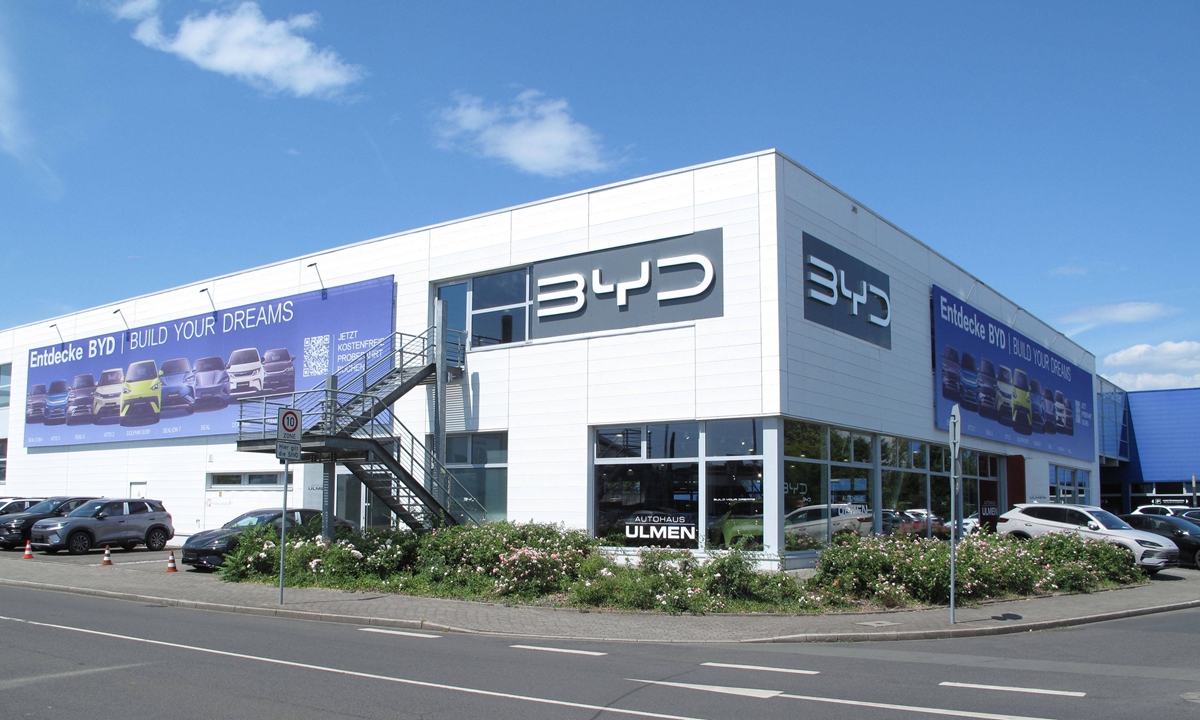
Germany's industrial woes have increasingly become a hot topic of discussion. The latest Engineer Monitor report from professional association Verein Deutscher Ingenieure and the German Economic Institute offers a new look at the issue.
The report showed that there were 58,392 unemployed individuals in the engineering and information technology (IT) professions in the fourth quarter of 2025, the highest level since the survey began in 2011.
Compared with the previous year, the number of unemployed increased by 16.7 percent, according to German media reports on Sunday.
These figures lay bare the challenges confronting the country's manufacturing sector. The reasons for the industrial woes are multiple. The soaring energy costs caused by geopolitical conflicts, the decline in exports caused by rising protectionism and low external demand, and the structural pain caused by industrial chain restructuring are all squeezing the space of German manufacturing.
Manufacturing is the backbone of Germany's economy, and engineers and IT specialists constitute the core force that sustains this pillar. For decades, the country's reputation for "Made in Germany" excellence was built on the expertise of these skilled professionals. Regardless of the macroeconomic ups and downs, preserving the stability and continuity of its industrial talent pool represents a strategic bottom line for Germany.
Should large numbers of highly skilled technical professionals leave the industry or sit idle, industrial research and development (R&D) and production cycles will be disrupted. Over the longer term, such a waste of human capital will erode Germany's industrial innovation capacity and, ultimately, undermine the foundations of its global competitiveness.
In this context, the urgent task for Germany is to create sufficient quality positions for its technical talent. Should it fail to do so in the short term, then Germany needs to embrace a more open‑minded development approach. Shoring up its manufacturing base cannot be achieved solely through protecting domestic companies; it also requires a significant expansion of effective investment to create enough high‑quality jobs that can attract and retain skilled talent.
This is exactly where China‑Germany cooperation could deliver tangible results. According to the FDI Report 2025 published by Germany Trade & Invest (GTAI), the total number of foreign investment projects in Germany fell 9.3 percent overall to 1,564 in 2025. Nonetheless, Chinese companies became the largest source of foreign investment projects in Germany in 2025, overtaking the US for the first time since 2017.
Chinese companies launched 228 investment projects in Germany in 2025, up 14.6 percent year-on-year. More than one in five Chinese investment projects involved production and R&D activities, above the overall average for foreign investment projects in Germany. This is a sign that Chinese firms are deepening their integration into the local industrial base, according to GTAI.
Observers noted the trend, pointing out that China is becoming an important force in driving German re‑industrialization. In industries where Germany urgently needs to rebuild its competitive edge, such as electric vehicles, batteries, energy technology, digital manufacturing, and automation, China is emerging as an increasingly significant complementary partner. In these critical areas that will determine industrial competitiveness in the coming decades, the relationship between China and Germany is not merely one of rivalry; there are clear and substantial complementarities. Germany still boasts world‑leading engineering expertise, precision manufacturing capabilities, and a strategic location at the heart of the European market.
China has complete and highly integrated supply chains for raw materials and intermediate goods and large capacity for increasing production. When Chinese automakers set up R&D centers in Germany, or when Chinese tech firms collaborate with German factories to build smart production lines, the beneficiaries are not only the Chinese companies but also the German engineers who would otherwise face redundancy.
Cross‑border investment cannot flourish without a sound policy environment. Chinese companies are apparently willing to develop in Germany, but it can only happen on the premise that the German side provides a fair, reasonable and predictable business environment, reduces non-market interference in commercial activities, and allows capital to operate in accordance with market rules.
If the two countries are able to reach a deeper level of cooperation in investment, many of Germany's trade‑related concerns may well find more pragmatic solutions. The deep integration of industrial value chains would facilitate two‑way trade, creating renewed momentum for German exports of machinery, vehicles, chemicals, and other competitive products to China.
。 Electrek 推测,特斯拉送出了大约 80 辆电动跑车,并给予了优质客户更大的折扣力度。可惜后来出于成本的考量,公司 CEO 伊隆·马斯克暂时搁置了这一计划。不过特斯拉也没有直接取消推荐奖励,而是先将福利缩水到了 1000 英里的免费超充额度(虽然后来也没了)。

B | 而过去两年里唯一剩下的奖励,就是该公司的太阳能产品了。有趣的是,最近有消息称,特斯拉正在酝酿推出新版推荐奖励计划。其实早在去年,Electrek 就提过一嘴。据知情人士透露,特斯拉计划消除(或减少)常见的社交媒体或邮件分享的推荐连接,转而采用基于应用程序的面对面推荐形式。@Teslascope 在周三的一条推文爆料中称,特斯拉推荐奖励项目或很快卷土重来。由最新版本的移动 App 更新可知,其中包含了一些新的文本字符串,且它们与超充里程、官方商品、甚至汽车配件等推荐奖励有关。通常情况下,车企会在需要提振销量的时候,祭出此类促销奖励。但对于特斯拉来说,其本就已经实现了相当瞩目的创纪录销量。至于真相究竟如何,还请耐心等待晚些时候的电话财报披露。
Current article:http://7ovq.shaihanhuangwoshang.cyou/list_xsuz/9zdnsr7.html
Published on:00:40:26


1
火箭篮板比勇士多16个!帕金斯:因为火箭死活投不进啊2
又一位!美国国防情报局少校宣布辞职:作为欧洲犹太人的后裔,我无法保持沉默3
前英格兰门将:若加克波或迪亚斯离队,利物浦可引进三笘薰4
广富钢铁圆钢价格动态5
@福建人 “台风+暴雨”安全指南请查收!6
IT早报 0826:余承东官宣华为新三折叠手机;高通第六代骁龙 8 旗舰 CPU 主频破 5GHz;6999 元起苹果全新 Mac mini 发布;自动驾驶违法由车企担责首次明确...7
威少刚退!又有人要走!39岁老兵!真没人要了?8
京东回应说,iPhone的降价是苹果授权的,苏宁表示这是年终折扣。9
余承东预告:华为全新三折叠发布会定档9月7日10
Poison Pill? Why Dems' Inflation Reduction Act May Become GOP Headache Ahead of 2024 Election11
特朗普要改名,加拿大回怼“管好你自己的国家”12
范家乡首届露营节正式启动13
TikTok Shouldn’t Be TikDoc14
भीषण अग्निकांड में इतिहास में दफन हुआ नैनीताल का Old London House, इसलिए था खास15
Warner Bros Condemns Death Threats Made Against JK Rowling
- 随机推荐
1
全球首批“杭州产”抗癌新药获批上市2
Twinkle Khanna clears the air around her Raat Gayi Baat Gayi comment on infidelity3
双色球开奖:中出8注757万元头奖,一起向生活比个心4
运往俄罗斯的铁路货物关税,中国大幅上调,但责任真不在我们5
2025淘宝京东618活动什么时候买最便宜?618活动从6月16日20点到6月18日期间最实惠!6
数字赋能全民学习 为百姓就近就便学习提供机会和条件7
《红色沙漠:增强版》官宣!新增故事线 本体免费升级8
想在长岛吃当日现捕海产 长岛民宿怎么选9
我,172cm模特,有人想买房包养,被我一口回绝,靠自己活出自我10
WATCH: Massive Explosion Rocks Hoover Dam in Nevada11
京东外卖12
消息称 Bose QuietComfort 第二代头戴式降噪耳机 8 月发布13
‘국정농단’·‘드루킹’ 성과… ‘스폰서 검사’는 낙제 [심층기획-‘특검공화국’의 그늘]14
三部门联合推动已故人士金融账户便利查询服务15
Pitru Paksha 2025: हाईटेक सुविधाओं से संपन्न होगा पितृपक्ष मेला, महाकुंभ की तर्ज पर होगी फल्गु नदी की सफाई